


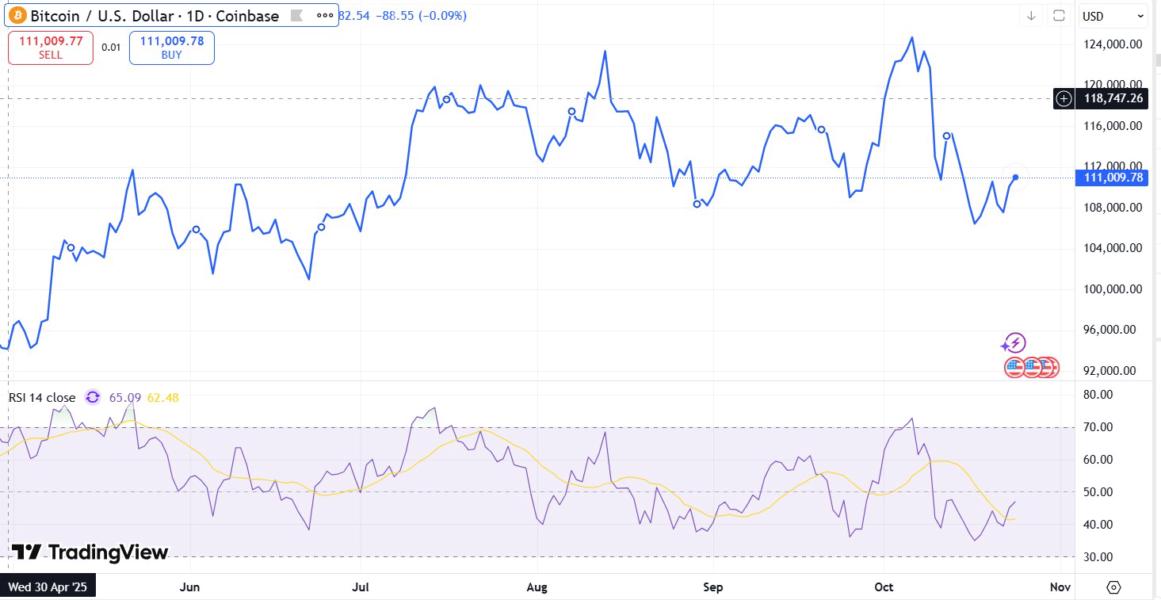
Bitcoin price analysis indicates a potential rare red yearly close for the flagship digital asset. With bears firmly defending the psychological $90,000 resistance level, investors and traders are closely monitoring market dynamics to understand what lies ahead for BTC. This comprehensive Bitcoin price analysis explores the technical indicators, market sentiment, and fundamental factors shaping Bitcoin’s trajectory as the year draws to a close.
Bitcoin has historically demonstrated remarkable resilience and growth over annual periods, making the prospect of a red yearly candle particularly significant for market participants. As institutional adoption continues to expand and regulatory frameworks evolve globally, understanding the current price action becomes crucial for both seasoned investors and newcomers to the cryptocurrency space.
Bitcoin’s Current Market Position
The current Bitcoin price analysis reveals a complex interplay of technical and fundamental factors influencing BTC’s performance. After reaching remarkable heights earlier in the year, Bitcoin has encountered sustained selling pressure near the $90,000 mark, a level that has transformed from potential support into formidable resistance.
Market data indicates that Bitcoin opened the year with significant bullish momentum, driven by several catalysts including institutional investment flows, spot Bitcoin ETF approvals, and increased mainstream adoption. However, macroeconomic headwinds, including persistent inflation concerns and central bank policy decisions, have contributed to the current consolidation phase.
The cryptocurrency market analysis shows that Bitcoin’s dominance remains relatively stable despite altcoin competition, suggesting that investor confidence in BTC as a store of value persists even during periods of price weakness. This dominance metric serves as a crucial indicator of market health and capital allocation within the broader digital asset ecosystem.
Technical Indicators Paint a Mixed Picture
From a Bitcoin technical analysis perspective, multiple timeframes reveal diverging signals that require careful interpretation. The daily chart shows Bitcoin trading within a descending channel pattern, with lower highs and lower lows characterizing the recent price action. This bearish structure has emerged following the rejection at $90,000, where substantial selling pressure materialized.
The relative strength index on the daily timeframe hovers in neutral territory, neither indicating oversold conditions that might attract buyers nor overbought levels that could trigger additional selling. This equilibrium suggests that the market is in a state of indecision, awaiting a catalyst to determine the next directional move.
Moving averages present a particularly interesting picture in the current Bitcoin price analysis. The 50-day moving average has crossed below the 200-day moving average on some timeframes, forming what technical analysts refer to as a death cross pattern. Historically, this pattern has preceded extended periods of price weakness, though Bitcoin has demonstrated the ability to invalidate such bearish signals through rapid recoveries.
Volume analysis reveals decreasing participation during recent price movements, suggesting that neither bulls nor bears have achieved decisive control. This low-volume environment often precedes significant volatility spikes as the market eventually breaks from consolidation patterns.
Critical Support and Resistance Levels
Identifying key Bitcoin support levels becomes essential for traders and investors navigating the current market environment. The immediate support zone sits around $85,000, where previous consolidation occurred and buying interest emerged. Below this level, the $80,000 psychological barrier represents the next major support area, coinciding with previous resistance-turned-support from earlier in the year.
Should selling pressure intensify beyond these levels, the Bitcoin price analysis identifies $75,000 as a critical support zone where substantial limit orders may be positioned. This level corresponds with significant Fibonacci retracement levels and previous areas of high trading volume, making it a potential inflection point for market sentiment.
On the resistance side, Bitcoin resistance levels are clearly defined by the repeated rejections near $90,000. This psychological milestone has become a formidable barrier where sellers have consistently emerged to defend against further advances. Breaking through this level would require substantial buying volume and a shift in market sentiment.
Above $90,000, the next resistance zone extends toward $95,000 and ultimately the psychologically significant $100,000 level. Each of these barriers represents not only technical resistance but also serves as a focal point for options positioning and futures contract settlement, adding complexity to the price discovery process.
Market Sentiment and Investor Behavior
Current crypto market trends reflect a cautious approach among investors as uncertainty persists regarding short-term price direction. The Fear and Greed Index, a popular sentiment indicator within the cryptocurrency community, has oscillated between fear and neutral zones, indicating that extreme optimism has given way to more measured expectations.
On-chain metrics provide valuable insights into investor behavior during this consolidation phase. Exchange balances have shown mixed signals, with some periods of accumulation as coins move off exchanges into cold storage, interspersed with episodes of distribution as holders take profits or reduce exposure. These patterns suggest a market in transition, where conviction levels vary significantly among different investor cohorts.
Long-term holders, often considered the strongest hands in Bitcoin markets, have generally maintained their positions according to blockchain analysis. This cohort’s resilience provides a foundation of support and suggests that the current price weakness may represent a consolidation phase rather than a fundamental shift in Bitcoin’s long-term trajectory.
Institutional Participation and Market Structure
The landscape of digital asset analysis has evolved dramatically with increased institutional participation in Bitcoin markets. Spot Bitcoin ETFs have attracted substantial assets under management, providing traditional investors with regulated exposure to cryptocurrency. These vehicles have introduced new dynamics to price discovery and liquidity provision.
Institutional trading desks report mixed activity levels, with some periods of aggressive accumulation followed by profit-taking sessions. The sophisticated strategies employed by these market participants, including options hedging and basis trading, add layers of complexity to interpreting short-term price movements.
Corporate treasury allocations to Bitcoin continue to generate headlines, though the pace of new announcements has moderated compared to previous periods of intense enthusiasm. Companies holding Bitcoin on their balance sheets face mark-to-market volatility that influences quarterly earnings, creating feedback loops between price action and corporate sentiment.
Macroeconomic Factors Influencing Bitcoin
The broader macroeconomic environment plays an increasingly significant role in Bitcoin price prediction models. Central bank monetary policy decisions, particularly those of the Federal Reserve, create ripples throughout financial markets that extend to cryptocurrency pricing. Interest rate expectations and inflation trajectories influence risk appetite and capital allocation decisions across asset classes.
The relationship between Bitcoin and traditional financial markets has strengthened in recent years, with correlations to equity indices reaching levels that challenge Bitcoin’s narrative as an uncorrelated asset. During periods of market stress, Bitcoin has occasionally moved in tandem with risk assets rather than demonstrating the safe-haven characteristics some proponents anticipate.
Currency fluctuations and geopolitical tensions also factor into the cryptocurrency market analysis. Bitcoin’s role as a neutral, borderless asset gains relevance during periods of currency instability or capital controls, potentially supporting demand from regions experiencing economic turbulence.
Historical Context of Red Yearly Closes
Placing the current situation in historical perspective, Bitcoin yearly performance has predominantly trended upward since the asset’s inception. Red yearly candles remain relatively rare occurrences in Bitcoin’s trading history, making the current prospect particularly noteworthy for long-term observers.
Previous instances of negative annual returns have typically preceded periods of renewed accumulation and subsequent bull markets. The cyclical nature of cryptocurrency markets, often discussed in relation to Bitcoin’s halving schedule, suggests that periods of consolidation and price weakness serve important functions in establishing sustainable foundations for future growth.
Market participants with longer time horizons view potential red yearly closes through the lens of Bitcoin’s multi-year trajectory rather than as definitive signals of fundamental deterioration. This perspective emphasizes the importance of maintaining appropriate investment horizons when participating in volatile markets.
Derivatives Market Insights
The derivatives market provides additional context for Bitcoin technical analysis by revealing positioning and expectations among sophisticated traders. Open interest in Bitcoin futures and options contracts indicates substantial market participation, though recent weeks have seen some reduction from peak levels.
Funding rates in perpetual futures markets have oscillated between slightly positive and slightly negative territory, suggesting balanced sentiment between long and short positions. Extreme funding rates in either direction often precede market corrections, while neutral rates like those currently observed can indicate equilibrium.
Options markets reveal interesting patterns in trader positioning. Put-call ratios and implied volatility metrics suggest that market participants are pricing in potential downside risk while maintaining exposure to upside scenarios. The options skew provides insights into the risk premium traders demand for different price outcomes.
Potential Scenarios and Price Forecasts
Constructing a comprehensive Bitcoin price forecast requires considering multiple scenarios that could unfold as the year concludes and new periods begin. The base case scenario envisions continued consolidation within the current range, with Bitcoin trading between $85,000 and $90,000 as bulls and bears reach temporary equilibrium.
A bullish scenario would involve a decisive break above $90,000 resistance, potentially triggered by positive catalysts such as favorable regulatory developments, renewed institutional buying, or macroeconomic shifts that benefit risk assets. Such a breakout could target the $95,000 to $100,000 range relatively quickly as short positions face liquidation and momentum traders enter positions.
The bearish alternative considers the possibility of support failure near $85,000, which could accelerate selling pressure toward lower support zones. In this scenario, the Bitcoin price analysis suggests that $80,000 and subsequently $75,000 would become focal points for potential stabilization and renewed buying interest.
Risk Management Considerations
Navigating the current market environment requires disciplined risk management approaches regardless of directional bias. The cryptocurrency trading signals emerging from technical and fundamental analysis should be evaluated within the context of individual risk tolerance and investment objectives.
Position sizing becomes particularly important during periods of elevated uncertainty. Traders and investors benefit from maintaining appropriate exposure levels that allow them to withstand volatility without facing forced liquidations or emotional decision-making during market swings.
Stop-loss placement and take-profit strategies should account for Bitcoin’s characteristic volatility and the presence of significant support and resistance levels. Mechanical approaches to risk management help remove emotional factors from trading decisions during stressful market conditions.
Regulatory Developments and Their Impact
The evolving regulatory landscape continues to influence crypto market trends and shapes institutional participation levels. Recent regulatory clarity in some jurisdictions has supported market development, while ongoing uncertainties in other regions create headwinds for broader adoption.
Regulatory frameworks addressing cryptocurrency taxation, custody requirements, and securities classification have direct implications for market structure and investor participation. Positive regulatory developments tend to support price appreciation by reducing uncertainty and expanding the pool of eligible participants.
Global coordination efforts among regulators create both challenges and opportunities for Bitcoin markets. While consistent international frameworks could support long-term growth, the implementation timeline and specific requirements influence near-term market sentiment and capital flows.
Mining Economics and Network Fundamentals
Bitcoin’s mining ecosystem provides fundamental support for network security and price discovery. The hash rate, measuring aggregate computational power securing the network, has generally maintained elevated levels despite price consolidation, indicating miner confidence in long-term economics.
Mining profitability metrics fluctuate with Bitcoin’s price, affecting miner behavior regarding coin sales and accumulation. During periods of price weakness, miners face pressure to sell more of their Bitcoin production to cover operational expenses, potentially adding supply to markets.
The upcoming dynamics of mining economics, including energy costs and hardware efficiency improvements, factor into long-term Bitcoin price analysis. Sustainable mining operations with low-cost energy access maintain profitability across wider price ranges, providing stability to network security.
Altcoin Market Dynamics
The broader cryptocurrency ecosystem influences Bitcoin’s performance through complex relationships and capital rotation patterns. During Bitcoin consolidation phases, traders sometimes rotate capital into alternative cryptocurrencies seeking outperformance, though this dynamic remains dependent on overall market sentiment.
Bitcoin’s dominance metric, measuring BTC’s market capitalization relative to the total cryptocurrency market, provides insights into capital allocation trends. Rising dominance suggests capital flowing toward Bitcoin as a relative safe haven within crypto, while declining dominance indicates speculative interest in altcoins.
The digital asset analysis of altcoin performance can offer leading indicators for Bitcoin’s direction. Widespread strength across alternative cryptocurrencies sometimes precedes Bitcoin rallies as improving sentiment throughout the sector eventually benefits the flagship asset.
Long-Term Perspective and Accumulation Strategies
For investors focused on Bitcoin’s long-term potential, current price action may represent accumulation opportunities rather than cause for concern. Dollar-cost averaging strategies allow participants to build positions gradually without attempting to time exact market bottoms.
The Bitcoin yearly performance viewed across multiple years demonstrates the asset’s capacity for substantial appreciation despite interim periods of consolidation or decline. Investors with conviction in Bitcoin’s fundamental value proposition often welcome price weakness as an entry opportunity.
Accumulation strategies during consolidation phases have historically rewarded patient participants willing to endure short-term volatility. The key challenge involves maintaining appropriate position sizing and avoiding overexposure that could force liquidation during adverse price movements.
Conclusion
This comprehensive Bitcoin price analysis reveals a cryptocurrency market at a pivotal moment, with BTC facing the rare prospect of a red yearly close as bears successfully defend the $90,000 resistance level. The technical picture presents mixed signals, with support holding near current levels but momentum indicators suggesting caution for near-term bulls.
Understanding the interplay between technical factors, market sentiment, institutional participation, and macroeconomic conditions becomes essential for navigating this environment successfully. The Bitcoin technical analysis suggests that the coming weeks will likely determine whether Bitcoin can reclaim bullish momentum or faces additional consolidation before attempting another advance.
For traders and investors, maintaining disciplined risk management while staying informed about market developments provides the foundation for successful participation. Whether the year concludes with a red or green candle, Bitcoin’s long-term trajectory depends on continued adoption, technological development, and its evolving role within the global financial system.
Stay informed with the latest Bitcoin price analysis by monitoring technical indicators, on-chain metrics, and fundamental developments that shape cryptocurrency markets. Understanding these dynamics positions market participants to make informed decisions aligned with their investment objectives and risk tolerance.
See more: Bitcoin Price Analysis, Halvin,g Macro Trends and Market Outlook
