

Altcoin News
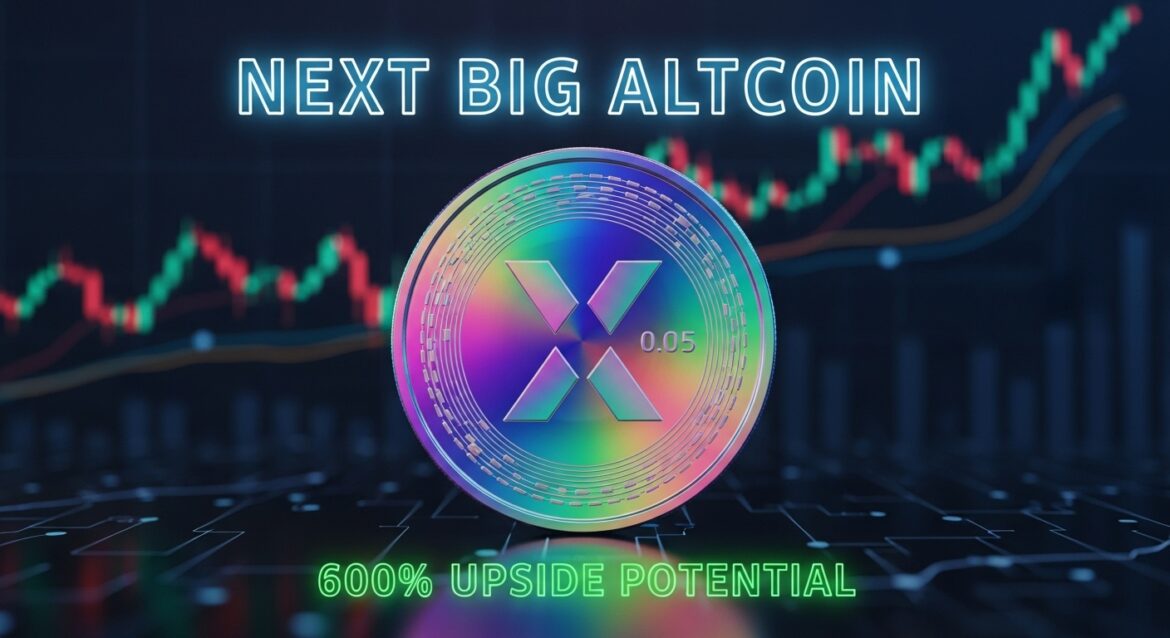
An altcoin under $0.05 that analysts believe could skyrocket by 600% in the coming months. While Bitcoin and Ethereum dominate headlines, the real wealth-building potential often lies in undervalued digital assets trading at fraction-of-a-cent prices. This comprehensive analysis explores why this particular low-cap cryptocurrency has captured the attention of institutional investors and retail traders alike, and what makes it stand out in an oversaturated market of thousands of blockchain projects.
The search for the next major cryptocurrency winner has intensified as investors seek alternatives to established coins with already substantial market capitalizations. When you discover an altcoin under $0.05 with solid fundamentals, active development, and genuine utility, the mathematical potential for exponential returns becomes incredibly compelling. Unlike investing in Bitcoin at $40,000 or higher, where doubling your money requires massive capital inflows, a sub-five-cent cryptocurrency can achieve spectacular percentage gains with relatively modest market cap increases.
Understanding the Appeal of Low-Price Cryptocurrencies
The psychological and mathematical advantages of investing in cryptocurrencies priced below five cents cannot be overstated. For many retail investors, the ability to accumulate thousands or even millions of tokens with a modest investment creates an emotional connection and sense of ownership that expensive cryptocurrencies cannot replicate. When you own 100,000 tokens of an altcoin under $0.05 rather than a fraction of a Bitcoin, the portfolio psychology shifts dramatically.
Beyond the psychological factors, the mathematical reality is equally compelling. A cryptocurrency trading at three cents only needs to reach eighteen cents to deliver that coveted 600% return that investors are targeting. For a well-positioned project with strong fundamentals, reaching such price levels during a bull market cycle is entirely achievable. The cryptocurrency market has historically demonstrated that projects solving real problems or capturing market attention can experience parabolic price movements that dwarf traditional investment returns.
The current market conditions create an especially favorable environment for discovering undervalued digital assets. After the significant corrections that have periodically swept through the cryptocurrency ecosystem, many legitimate projects with strong technology foundations find themselves trading at suppressed valuations. This market dislocation creates opportunities for informed investors who conduct thorough research rather than chasing already-pumped tokens.
Key Characteristics That Define Promising Sub-Five-Cent Cryptocurrencies
Not every altcoin under $0.05 represents a genuine investment opportunity. The cryptocurrency space is littered with failed projects, abandoned blockchains, and outright scams designed to separate inexperienced investors from their capital. Distinguishing between legitimate opportunities and potential disasters requires examining several critical factors that separate winners from losers.
First and foremost, the underlying technology must solve a real problem or address a genuine market need. Cryptocurrencies that exist solely as speculative vehicles without utility inevitably fail when market enthusiasm wanes. The most successful low-cap projects typically focus on specific niches within the broader blockchain ecosystem, whether that involves decentralized finance, gaming integration, supply chain management, or identity verification solutions.
The development team behind any cryptocurrency investment deserves intense scrutiny. Anonymous teams or projects led by developers without verifiable track records should trigger immediate caution. Successful blockchain projects require sustained development efforts, regular updates, and transparent communication with the community. Investors should seek projects where team members have real identities, relevant experience, and demonstrated commitment to long-term success rather than quick profits.
Tokenomics represents another crucial evaluation criterion when assessing any altcoin under $0.05 for investment potential. The total supply, circulating supply, token distribution, and vesting schedules all dramatically impact price potential. A cryptocurrency with quadrillions of tokens faces mathematical challenges reaching meaningful price levels regardless of market cap growth. Conversely, projects with reasonable supply metrics and deflationary mechanisms create more favorable conditions for price appreciation.
Market Dynamics Driving the 600% Upside Projection
The projection of 600% returns for this particular altcoin under $0.05 is not arbitrary speculation but rather based on technical analysis, fundamental valuation metrics, and historical performance patterns of similar projects. Understanding the drivers behind such projections helps investors make informed decisions about risk and reward potential.
Cryptocurrency valuations ultimately derive from supply and demand dynamics within relatively illiquid markets. When a project captures attention through partnership announcements, technology milestones, or exchange listings, the resulting buying pressure can quickly overwhelm available sell-side liquidity. This dynamic explains why cryptocurrencies frequently experience price movements that would be impossible in traditional equity markets with deeper liquidity pools.
The broader cryptocurrency market cycle plays an enormous role in altcoin performance trajectories. During Bitcoin bull runs, capital typically flows from Bitcoin into Ethereum, then into large-cap altcoins, and finally into smaller-cap projects as investors seek higher-risk, higher-reward opportunities. This sequential capital rotation pattern has repeated across multiple market cycles, and positioning early in quality low-cap projects before mainstream attention arrives can generate extraordinary returns.
Network effects and ecosystem growth create compounding value for blockchain projects that achieve critical mass. As more developers build applications, more users engage with the platform, and more capital locks into protocols, the underlying cryptocurrency typically appreciates in value. An altcoin under $0.05 that successfully builds momentum and attracts ecosystem participants can experience rapid valuation expansion that justifies aggressive price targets.
Risk Management Considerations for Low-Cap Cryptocurrency Investments
While the potential for 600% returns understandably excites investors, responsible investment strategy requires acknowledging and managing the substantial risks inherent in low-cap cryptocurrency positions. The same volatility that enables spectacular gains can also produce devastating losses for unprepared investors who fail to implement proper risk controls.
Position sizing represents the first line of defense against catastrophic losses. Financial advisors typically recommend limiting cryptocurrency exposure to a small percentage of overall investment portfolios, with low-cap altcoin positions representing an even smaller subset. Investing only capital you can afford to lose completely is not just conservative advice but essential wisdom when dealing with highly speculative assets like cryptocurrencies trading under five cents.
Diversification across multiple promising projects reduces the impact of any single investment failure. Rather than concentrating all capital into one altcoin under $0.05, sophisticated investors typically build portfolios of five to ten carefully selected low-cap positions. This approach ensures that the success of one or two projects can offset losses from others while maintaining exposure to potential moonshot opportunities.
Stop-loss discipline and profit-taking strategies separate successful cryptocurrency traders from those who experience the emotional rollercoaster of watching unrealized gains evaporate during market corrections. Establishing clear exit strategies before entering positions helps investors make rational decisions during periods of extreme volatility when emotional decision-making typically destroys returns.
Technical Analysis and Price Prediction Methodology
The 600% upside projection for this altcoin under $0.05 emerges from rigorous technical analysis combining multiple analytical frameworks. Understanding these methodologies helps investors evaluate whether such projections represent reasonable possibilities or unrealistic hype designed to attract uninformed speculators.
Chart pattern analysis reveals accumulation phases where smart money quietly builds positions before major price movements. Experienced traders look for specific formations like ascending triangles, cup-and-handle patterns, or inverse head-and-shoulders configurations that historically precede significant upward price movements. When these technical patterns align with fundamental catalysts, the probability of substantial gains increases materially.
Volume analysis provides crucial confirmation of price movement sustainability. Genuine breakouts occur on increasing volume as new participants enter the market, while false breakouts typically happen on declining volume as existing holders exit positions. An altcoin under $0.05 demonstrating consistent volume growth alongside gradual price appreciation often signals accumulation by informed investors ahead of major announcements or developments.
Fibonacci retracement levels and extension targets offer mathematical frameworks for projecting potential price objectives based on historical price action. Technical analysts use these tools to identify logical resistance levels and project where prices might travel during sustained uptrends. The 600% target often corresponds with key Fibonacci extension levels that represent natural profit-taking zones for traders.
Fundamental Catalysts Supporting Bullish Price Projections
Beyond technical analysis, fundamental developments provide the underlying substance that transforms speculative price predictions into achievable outcomes. Several categories of catalysts frequently trigger the explosive price movements that deliver life-changing returns to early investors in quality blockchain projects.
Partnership announcements with established corporations or recognized blockchain platforms instantly enhance credibility and expand potential use cases for emerging cryptocurrencies. When a relatively unknown altcoin under $0.05 announces collaboration with major industry players, the market rapidly reprices the asset to reflect increased legitimacy and adoption potential. These partnerships often provide access to distribution channels, technical resources, and user bases that would take years to build independently.
Exchange listings on major platforms like Binance, Coinbase, or Kraken dramatically increase liquidity and accessibility for retail investors. Many promising projects trade exclusively on smaller decentralized exchanges during early stages, limiting their investor base. When tier-one exchanges list these cryptocurrencies, the resulting surge in buying pressure frequently produces the exact type of parabolic price movements that generate 600% or greater returns.
Technology milestones such as mainnet launches, protocol upgrades, or successful audit completions validate development progress and reduce uncertainty about project viability. Cryptocurrencies often trade at suppressed valuations during development phases when execution risk remains high. Once teams demonstrate ability to deliver on roadmap commitments, valuations typically expand rapidly as investors gain confidence in long-term success probability.
Comparing Historical Performance of Similar Low-Cap Projects
Examining the track records of previous altcoin under $0.05 success stories provides valuable context for evaluating current opportunities and understanding realistic return expectations. The cryptocurrency market has produced numerous examples of sub-five-cent tokens that generated extraordinary wealth for early believers who maintained conviction through volatility.
Several notable projects began trading below five cents before achieving market capitalizations in the billions of dollars. These success stories demonstrate that while exceptional returns require exceptional circumstances, the cryptocurrency market has repeatedly proven capable of delivering outcomes that seem impossible in traditional financial markets. Understanding what separated winners from thousands of failed projects offers crucial lessons for contemporary investors.
Common threads connecting successful low-cap cryptocurrency investments include solving genuine problems, maintaining consistent development activity, building engaged communities, and executing effective marketing strategies. Projects that checked all these boxes frequently rewarded patient investors with returns exceeding 1000% or even 10000% over multi-year holding periods. The 600% target for the current altcoin under $0.05 under discussion represents conservative positioning relative to historical cryptocurrency success stories.
Conversely, examining failed projects reveals warning signs that savvy investors learn to recognize early. Abandoned development activity, team members selling tokens, broken promises regarding partnerships or technology deliverables, and lack of genuine community engagement all signal declining prospects. Avoiding these obvious pitfalls while concentrating capital in projects exhibiting positive characteristics dramatically improves success probability.
Building Conviction Through Research and Due Diligence
Successful cryptocurrency investment requires moving beyond surface-level research and developing genuine understanding of projects before committing capital. The difference between gambling on random altcoin under $0.05 positions and making informed investment decisions lies entirely in the quality and depth of pre-investment analysis.
Reading whitepapers and technical documentation separates serious investors from speculators chasing social media hype. While whitepapers can contain technical jargon that challenges non-technical readers, understanding the core value proposition, technology architecture, and competitive positioning is essential. Projects with vague or poorly written whitepapers often lack the technical substance necessary for long-term success.
Engaging with project communities through Discord servers, Telegram groups, or Reddit forums provides invaluable insights into ecosystem health and team responsiveness. Vibrant communities with active discussions, helpful moderators, and engaged team members typically indicate healthy projects with sustainable momentum. Conversely, communities dominated by price speculation without substantive technology discussion often signal shallow projects unlikely to deliver lasting value.
Tracking on-chain metrics through blockchain explorers reveals the truth about network activity regardless of marketing claims. Active addresses, transaction volumes, smart contract interactions, and token holder distribution all provide objective data about genuine adoption versus artificial hype. An altcoin under $0.05 with growing on-chain activity demonstrates real-world utility that supports bullish price projections.
Portfolio Strategy for Maximum Risk-Adjusted Returns
Constructing an optimal portfolio strategy around low-cap cryptocurrency opportunities requires balancing aggressive growth objectives with prudent risk management. Professional investors approach these high-risk, high-reward positions systematically rather than impulsively chasing every trending token.
The core-satellite portfolio approach provides an excellent framework for incorporating speculative altcoin under $0.05 positions into broader cryptocurrency holdings. This strategy maintains substantial positions in established cryptocurrencies like Bitcoin and Ethereum as portfolio foundations while allocating smaller percentages to higher-risk altcoin positions that offer asymmetric upside potential. This structure allows investors to participate in explosive growth opportunities without jeopardizing overall portfolio stability.
Dollar-cost averaging into positions over time rather than investing lump sums reduces timing risk and emotional decision-making. Cryptocurrency prices fluctuate violently in short timeframes, making precise entry timing nearly impossible even for experienced traders. Systematic accumulation at regular intervals averages purchase prices and builds positions without the stress of trying to perfectly time market bottoms.
Rebalancing strategies ensure that successful positions do not grow to represent dangerously concentrated portfolio weightings. When an altcoin under $0.05 delivers that projected 600% return, the position may suddenly represent an outsized percentage of total holdings. Taking partial profits to rebalance back to target allocations locks in gains while maintaining exposure to further upside potential.
Tax Implications and Record-Keeping Requirements
The excitement surrounding potential 600% returns from altcoin under $0.05 investments should not overshadow the critical importance of understanding tax obligations and maintaining meticulous records. Cryptocurrency taxation represents a complex and evolving regulatory landscape that catches many investors unprepared during tax season.
Most tax jurisdictions treat cryptocurrency as property rather than currency, creating taxable events for every trade, swap, or conversion between different digital assets. Simply moving from one altcoin to another triggers capital gains or losses that must be reported accurately. Investors who execute numerous trades throughout the year can find themselves facing overwhelming record-keeping challenges without proper systems in place.
Specialized cryptocurrency tax software solutions have emerged to address these challenges by automatically importing transaction data from exchanges and wallets, calculating cost basis using various accounting methods, and generating reports compatible with tax filing requirements. Implementing these tools from the beginning of your cryptocurrency investment journey prevents the nightmare scenario of attempting to reconstruct years of trading history retroactively.
The distinction between short-term and long-term capital gains carries significant tax implications in many jurisdictions. Profits from cryptocurrencies held less than one year typically face higher tax rates than assets held longer than twelve months. Strategic tax planning around holding periods can substantially improve after-tax returns from successful altcoin under $0.05 investments.
Security Best Practices for Protecting Cryptocurrency Holdings
Achieving spectacular returns from low-cap cryptocurrency investments provides little satisfaction if those gains are subsequently lost to hacks, scams, or security breaches. The decentralized and pseudonymous nature of blockchain technology places responsibility for security entirely on individual investors without the safety nets provided by traditional financial institutions.
Hardware wallets represent the gold standard for securing cryptocurrency holdings against online threats. These physical devices store private keys offline, making them immune to remote hacking attempts that compromise exchange accounts or software wallets. While hardware wallets require modest upfront investment, the security benefits far outweigh costs for anyone holding significant cryptocurrency value.
Never storing large cryptocurrency holdings on exchanges is fundamental security wisdom that countless investors learn through painful experience. Exchanges represent centralized honeypots attracting sophisticated hackers, and history is littered with examples of major platforms suffering catastrophic security breaches. The phrase “not your keys, not your coins” encapsulates the reality that cryptocurrencies stored on exchanges remain under exchange control rather than investor ownership.
Implementing multi-factor authentication, using unique passwords for every platform, avoiding public WiFi for cryptocurrency transactions, and maintaining healthy skepticism about unsolicited investment opportunities all contribute to comprehensive security hygiene. As your altcoin under $0.05 investment potentially grows 600%, the security measures protecting those gains become increasingly critical.
The Psychology of Holding Through Volatility
Perhaps the greatest challenge separating investors who achieve projected 600% returns from those who fail is the psychological fortitude required to maintain positions through inevitable volatility. Cryptocurrency markets test investor conviction through gut-wrenching drawdowns that shake out weak hands before ultimate price objectives are achieved.
Understanding that 30-50% corrections represent normal cryptocurrency market behavior helps investors maintain perspective during temporary price declines. Assets that ultimately deliver 600% returns rarely move in straight lines, instead experiencing violent oscillations that create fear and uncertainty. Investors who sell during these corrections lock in losses and miss subsequent recovery rallies that erase drawdowns and push prices to new highs.
Developing predetermined exit strategies before entering positions provides mental frameworks for rational decision-making during emotional market conditions. Knowing in advance at what price levels you will take partial profits or exit positions completely prevents impulsive reactions to short-term price movements. Whether your altcoin under $0.05 investment surges or plunges, having a plan dramatically improves decision quality.
Avoiding obsessive price checking and cultivating patience are perhaps the most underrated skills in cryptocurrency investing. Constantly monitoring price fluctuations amplifies emotional responses and increases the likelihood of counterproductive trading decisions. Successful long-term investors often check prices infrequently, focusing instead on fundamental developments and overall market conditions rather than minute-by-minute chart movements.
Conclusion
The opportunity to invest in a promising altcoin under $0.05 with legitimate potential for 600% upside represents exactly the type of asymmetric risk-reward scenario that attracts sophisticated investors to cryptocurrency markets. While the risks are substantial and many low-cap projects ultimately fail, thorough research combined with prudent position sizing and disciplined risk management can tilt probabilities strongly in your favor.
Success in identifying the next major cryptocurrency winner before mainstream recognition requires combining technical analysis, fundamental research, and psychological discipline into a comprehensive investment approach. The investors who achieve life-changing returns are those who do the work others avoid, maintain conviction when others panic, and execute systematic strategies rather than chasing emotional impulses.
As you evaluate whether this particular altcoin under $0.05 deserves a position in your portfolio, remember that the cryptocurrency market rewards preparation, patience, and persistence. The 600% upside projection is not guaranteed but represents a realistic possibility for projects exhibiting the right combination of technology, team, timing, and market conditions.
Take action today by conducting your own thorough research into promising low-cap cryptocurrencies, implementing proper security measures to protect your investments, and developing the psychological frameworks necessary to maintain positions through inevitable volatility. The next major cryptocurrency success story is being written right now, and informed investors who position themselves early in quality projects stand to benefit enormously from the continued evolution of blockchain technology and digital assets.
See more: Altcoin Season Winners: Hayes Says You Just Missed Them